Fountain Water Shapes Guide: Nozzle Types & Design Principles
- Conocimiento del Producto
- Zhongyao Cao
Introduction
The magic of a fountain lies in its movement. Before the lights flash and the music plays, the water itself must dance. But achieving that perfect arc, that smooth glassy column, or that explosive burst of spray is not an accident. It is the result of precision engineering applied to the most basic element: the nozzle.
For fountain designers, landscape architects, and project engineers, understanding nozzle types and their hydraulic principles is fundamental. This guide explores the most common water effects and the nozzles that create them.
1. The Physics of Water in Air
A water jet’s shape is determined by three factors: pressure, flow rate, and nozzle orifice design. When water is forced through an opening, its internal pressure converts to velocity. The shape of that opening—its diameter, contour, and internal geometry—controls whether the water emerges as a solid stream, a mist, or a patterned spray.
Nozzle materials matter significantly. Most commercial fountain nozzles are machined from 304 or 316 stainless steel to resist corrosion and maintain precise tolerances over years of operation. Brass and engineering plastics are also used for specific applications.
2. Laminar Flow Nozzles: The Glass Rod Effect
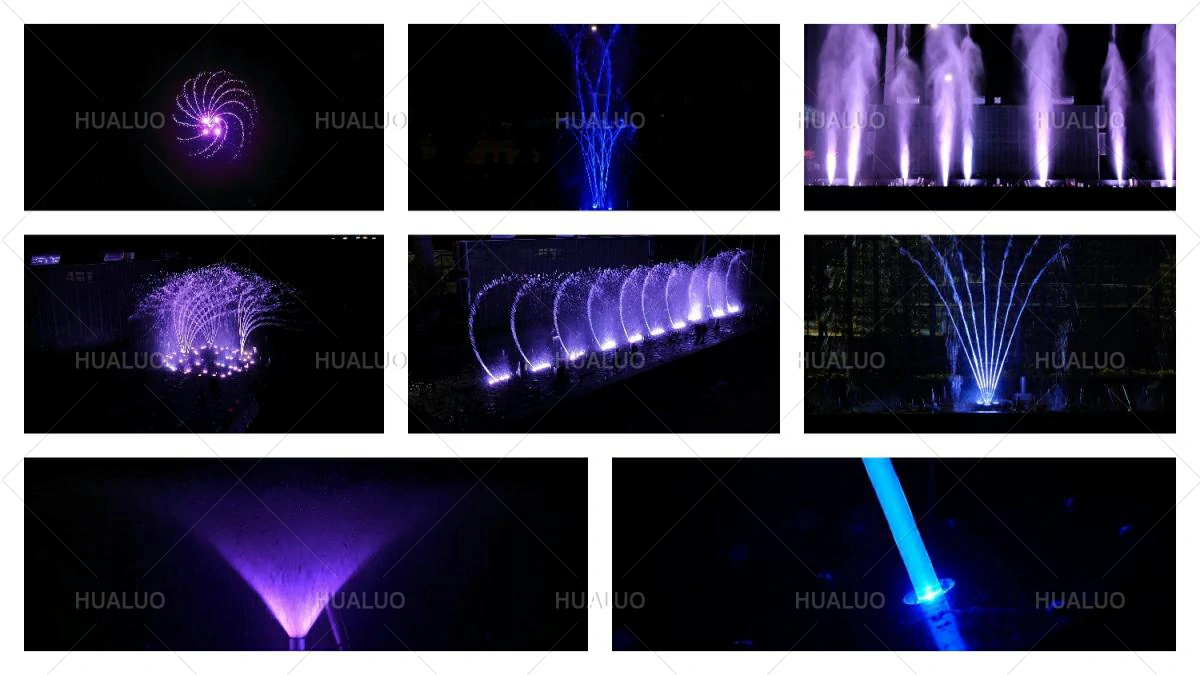
Perhaps the most visually striking water effect is laminar flow. These nozzles produce a crystal-clear, solid-looking stream of water that appears motionless, like a glass rod arching through the air.
The principle is simple but exacting: water must be completely still as it exits the nozzle. Internal flow straighteners and foam inserts eliminate all turbulence. The result is a smooth, transparent stream that can be perfectly illuminated, appearing to glow from within.
Laminar jets are signature features in high-end commercial plazas and hotel entrances, where their elegant, controlled appearance commands attention. They require clean water and precise pressure regulation to maintain their form.
3. Aerating and Foaming Nozzles
Where laminar flow seeks to eliminate air, aerating nozzles intentionally mix air with water. As water passes through the nozzle, it draws in air through side vents, creating a frothy, white column that sparkles under light.
The effect is visually bright and energetic, with the added benefit of softening the water’s impact on the pool surface, reducing splash and noise. These nozzles are popular in interactive play fountains and children’s areas, where the soft, bubbly water is inviting and safe.
4. Spray Nozzles: Creating Patterns
Spray nozzles are the workhorses of fountain design. They create the classic fan shapes, bells, and radial patterns seen in traditional and contemporary fountains.
Fan Nozzles: Produce a flat, fan-shaped spray, ideal for creating water curtains or backdrops for lighting effects.
Bell Nozzles: Create a thin, hemispherical sheet of water that forms a clear dome. When illuminated from below, the effect is particularly beautiful.
Ring Nozzles: Discharge water radially to form a chalice-like shape. Multiple rings can be stacked for tiered effects.
Each of these nozzles relies on precisely machined slots or orifices to shape the water consistently.
5. Geyser and Foam Jets
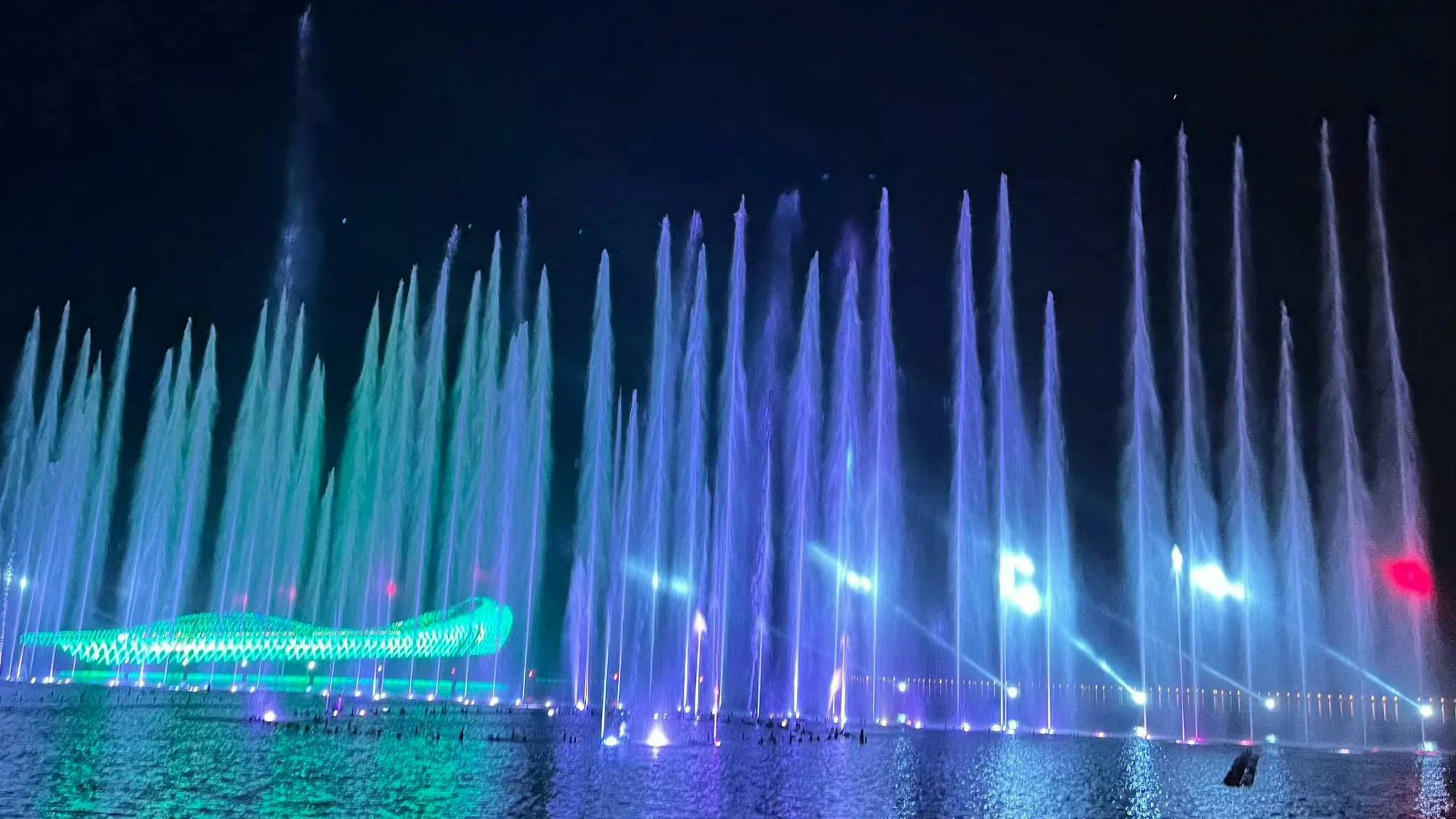
For bold, dramatic statements, geyser jets deliver. These are typically large-diameter nozzles connected to high-flow pumps that push a thick column of water vertically into the air. The effect can be further enhanced by injecting air at the base, creating a towering white foam jet.
In large-scale projects, geyser jets are often synchronized with music and lighting to provide the powerful climax of a water show. Their height and visual weight create a sense of energy and celebration.
6. Rotating and Moving Nozzles
Static effects are just the beginning. Many modern fountains incorporate movement through rotating or articulating nozzles.
Rotating Nozzles: Mounted on a spinning mechanism, these nozzles trace circles or spirals in the air, creating dynamic, ever-changing patterns.
Articulated Nozzles: Controlled by servomotors, these nozzles can change direction in real-time, allowing water jets to “dance” across the pool or interact with each other.
Water Bowls and Cups: These create cascading, reflective effects as water overflows from one level to the next, often used in serene, meditative water features.
7. Choreography: Combining Effects
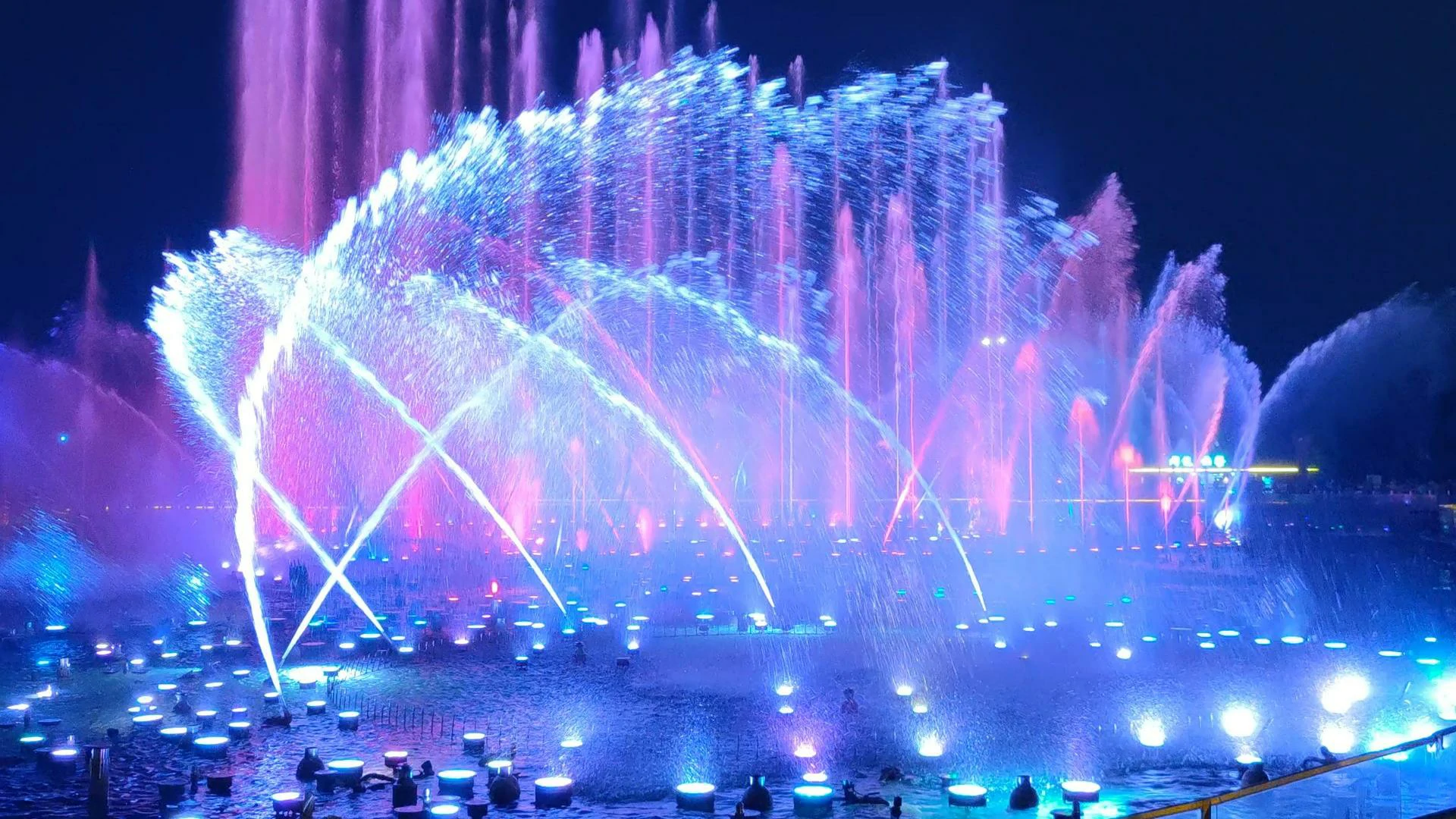
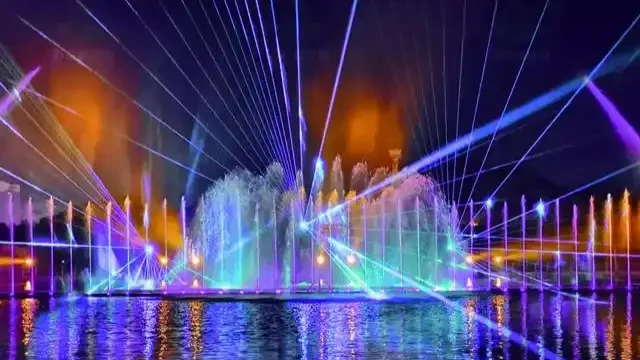
Selecting individual nozzles is only the first step. The true artistry of fountain design lies in choreography—combining different water shapes, timing their movements, and synchronizing them with music and light.
A well-designed fountain might use laminar jets for elegance, spray nozzles for background texture, and geyser jets for dramatic moments. The control system sequences valves and pumps to create a narrative through water. This is where fountain programming transforms a collection of hardware into a performance.
8. Practical Considerations for Nozzle Selection
Beyond visual effect, several engineering factors guide nozzle selection:
Wind Exposure: Outdoor fountains in open areas may require lower trajectories or heavier water columns to maintain shape in windy conditions.
Water Quality: Laminar flow nozzles demand filtered water to prevent clogging. Aerating nozzles are more forgiving.
Pump Matching: Each nozzle type has specific flow and pressure requirements. The pump system must be designed to deliver exactly what each nozzle needs.
Maintenance Access: Nozzles eventually require cleaning. Designs should allow easy removal and reinstallation without draining the entire pool.
Conclusion
Fountain nozzles are the instruments that transform water into art. From the quiet precision of laminar flow to the exuberant burst of a geyser, each water shape begins with a carefully engineered opening.
At HUALUO, our nozzle systems are precision-machined from high-grade materials to deliver consistent, reliable performance over decades of operation. Whether your project requires the elegant transparency of laminar jets or the energetic sparkle of aerated spray, our engineering team can specify and supply the right solution.
Planning a new fountain project? Contact us for technical consultation and nozzle selection assistance.
Related Posts

Solicite una Propuesta y Estimado
Envíenos fotos/videos de su sitio y los datos básicos para una fuente flotante. Le responderemos con una orientación conceptual de plataforma, una sugerencia de configuración y un estimado de presupuesto.
Información de Contacto
- DIRECCIÓN: No. 399, Calle Antai, Zona de Desarrollo Económico, Ciudad de Neijiang, Provincia de Sichuan, China.
- CORREO ELECTRÓNICO: sales@hualuolighting.com
- WHATSAPP: 0086 19302661002
SÍGANOS:
Sus datos serán destinados exclusivamente a la consultoría del proyecto.