
Floating Fountain Systems: Solutions for Lakes & Water Features
- Conocimiento del Producto
- Zhongyao Cao
Introduction
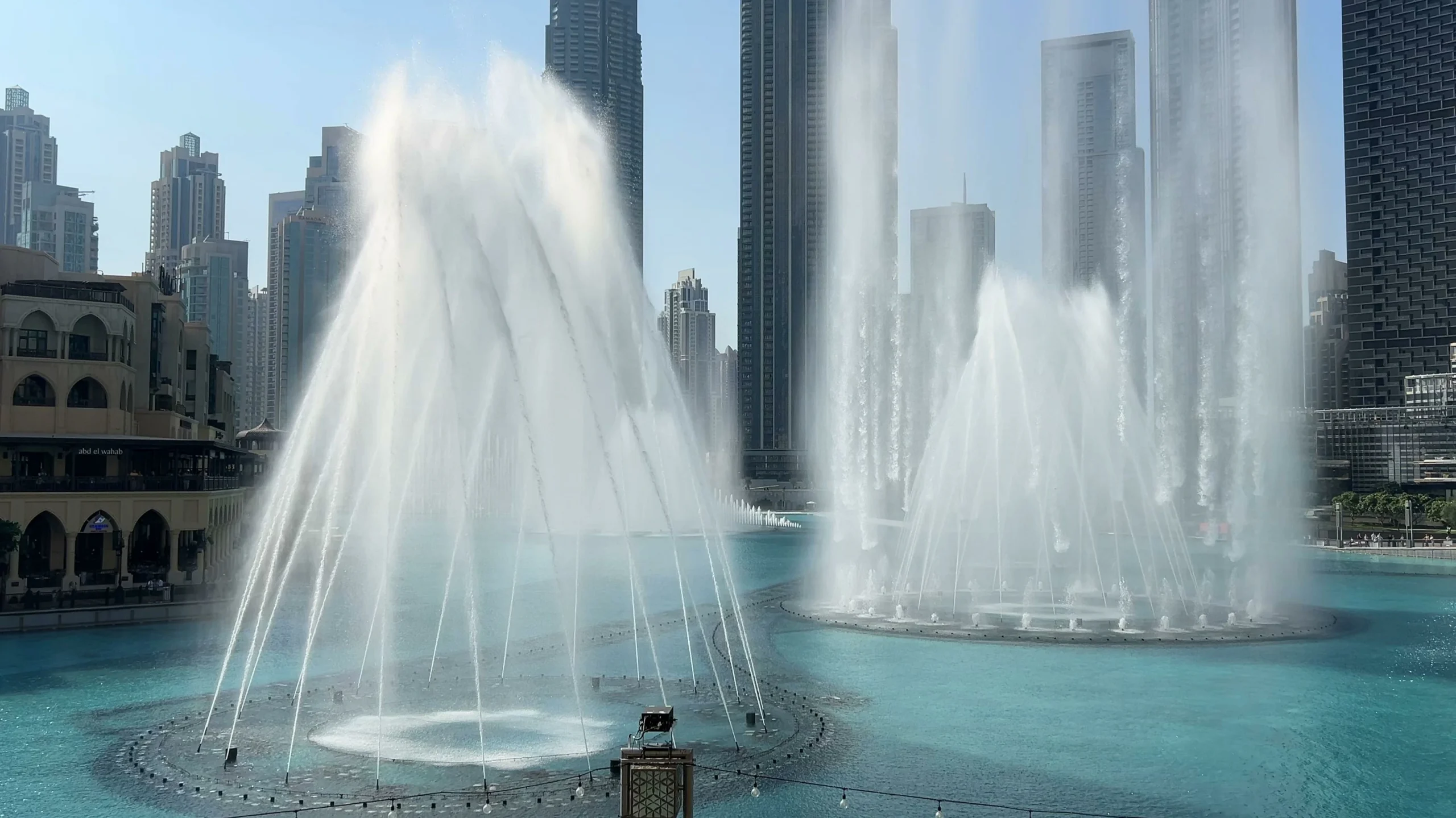
Not every water feature requires extensive civil construction. For lakes, reservoirs, and existing water bodies, floating fountain systems offer an elegant solution that combines visual impact with minimal site disruption. These self-contained units sit on the water surface, creating spectacular displays without the need for excavated basins or complex plumbing.
This guide explores floating fountain technology, its applications, and what to consider when specifying a system for your project.
1. What Is a Floating Fountain?
A floating fountain is a modular water feature mounted on a buoyant platform. The platform supports pumps, nozzles, lighting, and control equipment, all powered via submersible cables from a nearby shore connection. The entire assembly floats on the water surface, drawing water directly from the body below.
Unlike traditional fountains that require a concrete basin, floating systems leave the underlying water body unchanged. This makes them ideal for natural lakes, man-made reservoirs, and retrofit applications where construction would be impractical or undesirable.
2. Applications and Use Cases
Lakes and Ponds: Municipal parks, residential communities, and golf courses use floating fountains as visual centerpieces. The spray patterns add movement and sparkle to otherwise static water surfaces.
Reservoirs and Water Storage: Floating fountains serve dual purposes—aesthetic enhancement and water quality improvement through aeration.
Commercial Developments: Hotels, resorts, and corporate campuses located on water bodies install floating fountains to create memorable arrival experiences.
Event Venues: Temporary or semi-permanent floating installations can be deployed for festivals, celebrations, and waterfront events.
3. Aeration Benefits
Beyond aesthetics, floating fountains provide environmental benefits. As water is pumped into the air and splashes back, it absorbs oxygen. This aeration process:
Reduces algae blooms by circulating water and breaking up thermal stratification.
Improves water clarity and reduces odors.
Supports aquatic life by maintaining dissolved oxygen levels.
Can help manage nutrient buildup in stagnant water bodies.
For projects with environmental objectives, aeration capacity becomes a key specification.
4. Design Options and Configurations
Floating fountain systems are available in a range of sizes and effects:
Single Nozzle: Simple geyser or spray patterns suitable for smaller ponds or subtle accents.
Multi-Nozzle Arrays: Multiple jets arranged in rings, clusters, or linear patterns create more elaborate displays.
Patterned Sprays: Nozzle configurations produce fan, bell, or tiered water shapes that can be synchronized.
Lighted Systems: Submersible LED lights integrated into the platform illuminate the water spray from below, creating nighttime impact.
Color-Changing RGB: DMX-controlled color mixing allows dynamic shows synchronized with music or programmed sequences.
5. Structural and Engineering Considerations
Platform Buoyancy: The platform must support the weight of pumps, piping, and equipment while remaining stable in wind and waves. High-density polyethylene or stainless steel pontoons are common.
Anchoring System: Proper anchoring prevents drift. Options include weighted cables, pile anchors, or shoreline guy lines. Design must account for water level fluctuations and extreme weather.
Power Supply: Submersible power cables run from shore to the platform. Cable length, waterproof connections, and strain relief are critical for safety and longevity.
Access for Maintenance: The system should be designed for easy retrieval—either by towing to shore or via a winch—for seasonal service and winterization.
6. Equipment Selection
Pumps must be sized for the desired spray height and pattern while operating efficiently at the required flow rate. Stainless steel or bronze pump components resist corrosion in freshwater and saltwater environments.
Nozzles should be fabricated from corrosion-resistant materials, typically 304 or 316 stainless steel. For saltwater applications, 316 is strongly recommended.
Lighting fixtures must be submersible with IP68 rating. LED technology is standard, offering long life and low power consumption.
7. Installation and Site Requirements
Water Depth: Minimum depth required varies by system size but typically ranges from 2 to 5 meters to ensure adequate clearance below the platform.
Clearance Zone: The area around the fountain should be free of boats, swimmers, and obstructions. Buoys or signage may be required.
Shore Connection: A weatherproof electrical enclosure houses power supplies, control equipment, and safety disconnects.
Permitting: Some jurisdictions require permits for installations on public waters. Environmental impact assessments may be needed for sensitive ecosystems.
8. Operation and Maintenance
Floating systems require periodic maintenance:
Seasonal Cleaning: Nozzles and pump intakes should be inspected and cleaned to prevent clogging from debris or algae.
Winterization: In freezing climates, the system must be removed or decommissioned before ice forms. Some systems are designed for winter storage on shore.
Electrical Inspections: Cables and connections should be checked annually for wear or damage.
9. Cost Considerations
Floating fountain costs vary based on size, effects, and lighting complexity. Factors include:
Platform size and materials.
Pump capacity and redundancy (some systems use multiple pumps for reliability).
Lighting configuration (basic white vs. full-color DMX).
Anchoring and electrical infrastructure.
Installation and permitting.
While initial investment is typically lower than in-ground fountains, ongoing operating costs—primarily electricity—should be factored into long-term budgets.
Conclusion
Floating fountain systems offer a versatile, cost-effective way to enhance lakes, ponds, and reservoirs. Whether the goal is visual impact, environmental improvement, or both, these self-contained water features deliver compelling results with minimal site disruption.
At HUALUO, we design and supply floating fountain systems tailored to each project’s unique conditions—from compact units for residential ponds to large-scale illuminated installations for commercial and municipal applications. Our integrated approach covers equipment selection, system engineering, and technical support.
Planning a floating fountain installation? Contact us to discuss your site requirements.
Related Posts

Solicite una Propuesta y Estimado
Envíenos fotos/videos de su sitio y los datos básicos para una fuente flotante. Le responderemos con una orientación conceptual de plataforma, una sugerencia de configuración y un estimado de presupuesto.
Información de Contacto
- DIRECCIÓN: No. 399, Calle Antai, Zona de Desarrollo Económico, Ciudad de Neijiang, Provincia de Sichuan, China.
- CORREO ELECTRÓNICO: sales@hualuolighting.com
- WHATSAPP: 0086 19302661002
SÍGANOS:
Sus datos serán destinados exclusivamente a la consultoría del proyecto.