
Dry Fountain vs Traditional Fountain: Which to Choose?
- Product Knowledge
- Zhongyao Cao
Introduction
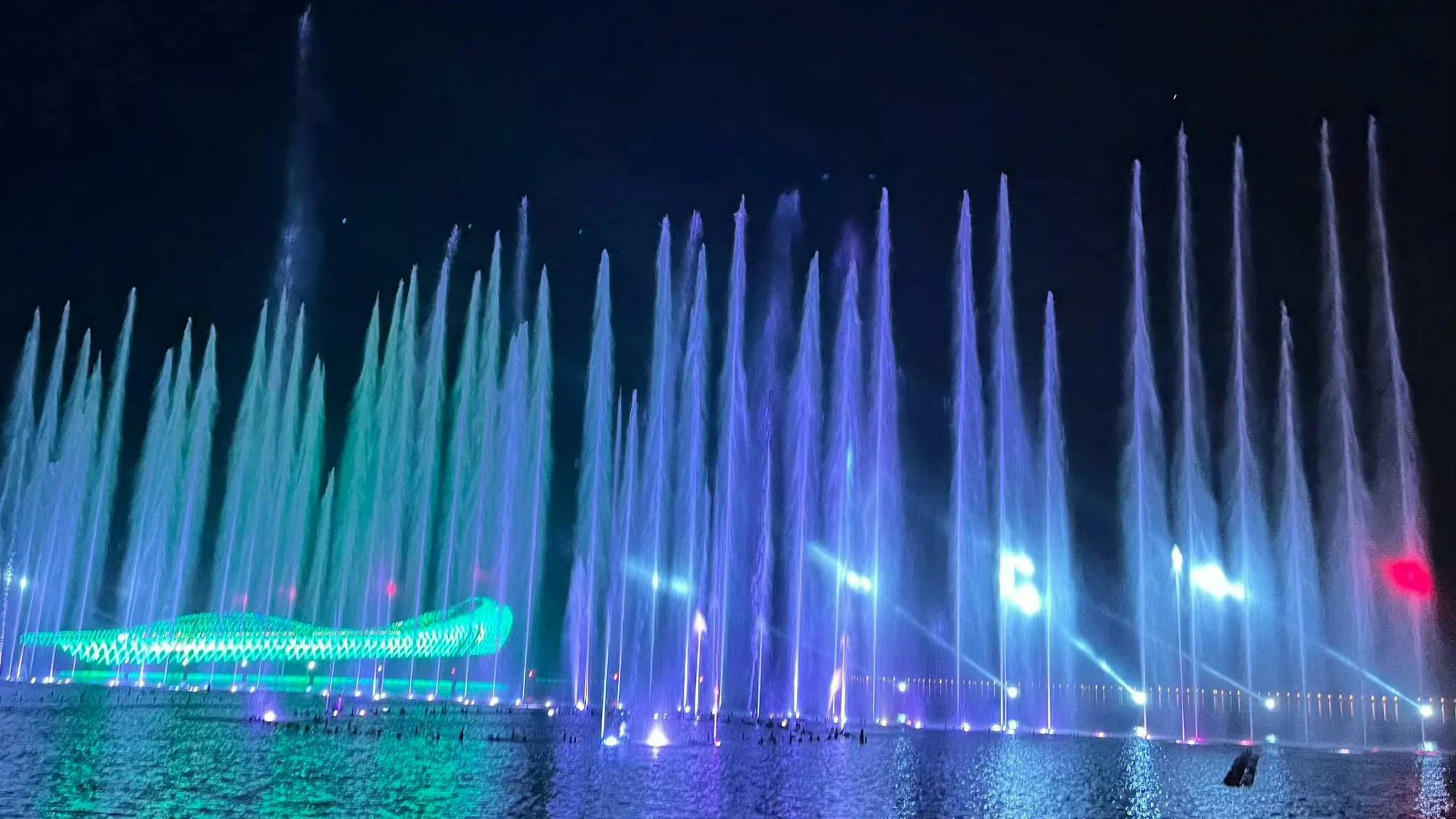
When planning a fountain for a public plaza, shopping mall, or commercial development, one of the earliest decisions is whether to build a traditional pool fountain or a dry deck (also known as dry or interactive) fountain.
Both have their place. The right choice depends on space constraints, usage patterns, safety requirements, and maintenance expectations. This comparison breaks down the key differences to help you make an informed decision.
1. Definition and Core Concept
Traditional Pool Fountain
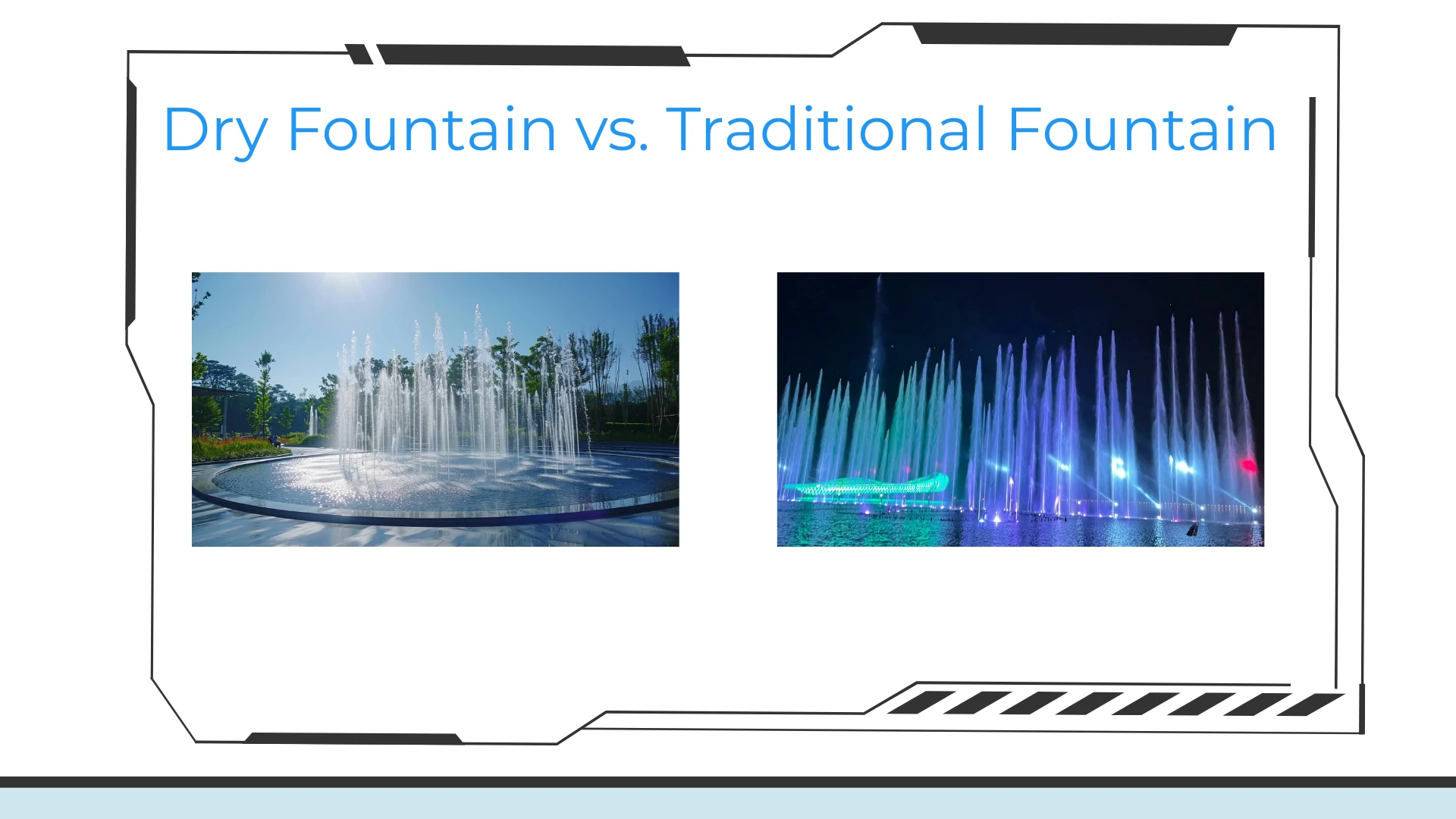
A conventional fountain features a permanent water basin—either at grade or raised—containing the water volume. The fountain operates within this basin, with water recirculating from the pool to the jets and back.
Dry Deck Fountain
A dry fountain has no visible standing water when not in operation. Nozzles, lights, and drains are flush-mounted into a paved surface. During operation, water jets rise from the ground, then drain instantly through grated channels or slot drains. When the fountain is off, the area becomes usable pedestrian space.
2. Space Utilization
| Factor | Traditional Fountain | Dry Fountain |
|---|---|---|
| Operating Hours | Dedicated water feature 24/7 | Multi-purpose space; pedestrian area when off |
| Foot Traffic | Cannot be walked through | Full pedestrian access when inactive |
| Event Flexibility | Fixed water feature; can’t host other activities | Space can host markets, performances, or seating |
A dry fountain essentially gives you two spaces in one: a water feature during programmed hours, and a flexible hardscape plaza at all other times.
3. Safety Considerations
Traditional Fountain
Open water basin presents drowning risk, requiring railings or barriers.
Slip hazards around wet edges.
Not suitable for unsupervised children without physical separation.
Dry Fountain
No standing water means no drowning risk.
Surface designed for quick drainage; wet only during active cycles.
Children can safely play in the jets under supervision.
Accessible for all ages and mobility levels.
For family-friendly public spaces and high-traffic areas, dry fountains offer significant safety advantages.
4. Maintenance Requirements
Traditional Fountain
Continuous water treatment: filtration, chemical balancing, algae control.
Larger water volume means higher chemical usage.
Periodic draining and cleaning required.
Winterization in cold climates: draining, covering, or indoor storage.
Dry Fountain
Smaller water volume in underground storage tanks.
Filtration and UV treatment still required, but lower chemical demand.
Drains and nozzles require regular cleaning to prevent debris clogging.
Simpler winterization: drain underground system, blow out lines.
While both require ongoing maintenance, dry fountains typically have lower daily operating costs due to reduced water treatment needs.
5. Installation and Site Requirements
| Aspect | Traditional Fountain | Dry Fountain |
|---|---|---|
| Below-Grade Space | Pump room typically adjacent | Underground vault or tank required for water storage |
| Drainage | Overflow drain only | Precision-graded surface with slot drains |
| Structure | Concrete basin required | Reinforced pavement over drainage system |
| Utility Access | Electrical and water lines to basin | Electrical, water, and drainage to multiple nozzle points |
Dry fountains require more complex below-grade infrastructure, but they eliminate the need for a visible basin structure.
6. User Experience and Interactivity
Traditional Fountain
Passive viewing experience.
Sitting at edges permitted, but water contact usually discouraged.
Formal, sculptural presence.
Dry Fountain
Active, hands-on engagement.
Children and adults can run through the jets.
Programmable patterns invite play.
Creates a social gathering point.
For projects prioritizing visitor engagement and repeat visitation, dry fountains consistently outperform traditional basins.
7. Aesthetic and Design Flexibility
Traditional Fountain
Can be monumental, sculptural, or minimalist.
Materials: stone, tile, metal, concrete.
Water surface itself becomes a design element—reflective or dynamic.
Dry Fountain
Flush integration with surrounding pavement materials.
Nearly invisible when off, allowing architecture to take priority.
Water jets become the sole visual focus when active.
The choice depends on whether you want a permanent water presence or a space that transforms between dry and wet states.
8. Cost Comparison
Initial Construction
Traditional Fountain: Basin structure, waterproofing, pump room, simpler drainage. Typically lower first cost for small to medium installations.
Dry Fountain: Underground tank, precision drainage, more complex piping, reinforced paving. Higher initial cost for equivalent scale.
Operating Costs
Traditional Fountain: Higher ongoing water and chemical consumption.
Dry Fountain: Lower daily operating costs; water loss only from splashing and evaporation.
Lifecycle Considerations
A dry fountain may cost more upfront but can deliver savings over time through reduced maintenance and increased usable space value.
9. When to Choose Each
Choose Traditional Fountain When:
The fountain serves as a formal, sculptural landmark.
Passive viewing is the primary intent.
Budget for construction is prioritized over long-term flexibility.
Space is limited and underground tank installation is impractical.
Climate involves freezing; indoor or seasonally drained options exist.
Choose Dry Fountain When:
Space must serve multiple functions (pedestrian plaza, events, play area).
Safety and accessibility are top priorities.
Active, interactive experiences are desired.
The site can accommodate underground water storage.
Long-term operational efficiency matters.
Conclusion
Both traditional and dry fountains have proven track records in public and commercial spaces. The decision ultimately rests on how the space will be used, who will use it, and how the feature fits into the broader site design.
Traditional fountains offer timeless elegance and straightforward construction. Dry fountains deliver versatility, safety, and engagement—qualities increasingly valued in contemporary urban design.
At HUALUO, we design and supply both types, with expertise in system engineering, water treatment, lighting integration, and control automation. Our team can help evaluate your site conditions and project goals to recommend the optimal solution.
Considering a fountain for your next project? Contact us to discuss your requirements.
Related Posts

Get a Proposal & Budget Estimate
Send your site photos/video and basic data. We’ll reply with a platform concept direction, configuration suggestion, and budget estimate.
Contact Info.
- ADDRESS: No. 399, Antai Street, Economic Development Zone, Neijiang City, Sichuan Province, China.
- Email: sales@hualuolighting.com
- WHATSAPP: 0086 19302661002
Follow Us:
Your information is used only for project consultation.